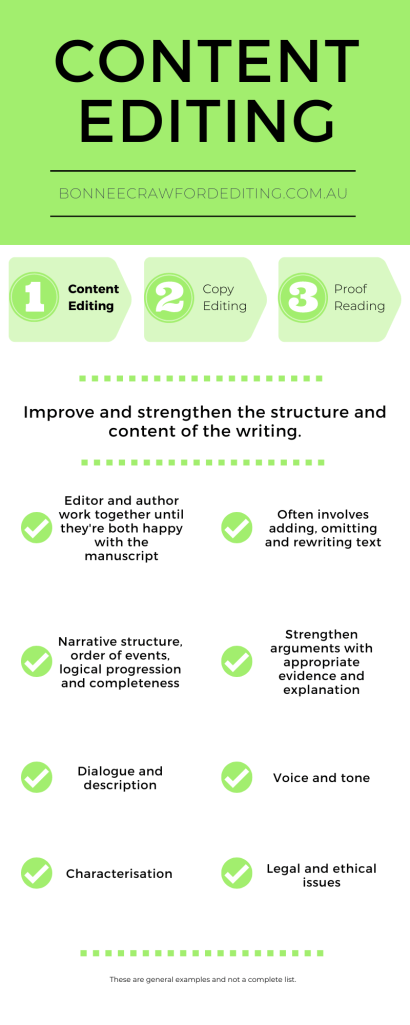
Editing is so much more than correcting spelling and grammar. In fact, there is a whole stage of editing that comes first.
Before an editor worries about typos, they will help you get your writing to a stage where it won’t require substantive changes. To do that, they’ll begin the editing process with content editing.
What is content editing?
Content editing—sometimes called structural editing—is the first stage of editing your work should undergo. This is when an editor works closely with an author to improve the overall content and structure of a piece of writing.
An easy way to work out what happens at this stage is to consider the name; this level of editing focuses on the content and the structure of the writing. Put simply, the aim of content editing is to strengthen arguments, develop the style and voice, and make sure the work flows logically.
What happens during content editing?
During the content editing or structural editing stage, an editor provides constructive feedback to help guide the author in making changes that strengthen their writing. This process often includes rewriting and rearranging paragraphs, adding to the manuscript, and removing unnecessary sections.
An editor will also be on the lookout for potential ethical and legal issues at this early stage. If an editor finds anything of concern, they will help the author navigate the problem.
The specifics of what happens during content editing will vary depending on the type of writing. The examples below are just the tip of the iceberg. I’ll talk more about content editing for specific writing forms in later posts.
Creative writing
For creative writing, content editing includes improving characterisation, perfecting dialogue, and eradicating plot holes. An editor can work with you to make your story more compelling and harder to put down.
Academic writing
Academic writers will usually work with someone familiar with their subject area at this stage of editing. Content editing can include checking that arguments and assertions make sense, are well-structured, and are appropriately supported through citations and other evidence.
Technical writing
For technical writing, content editing includes keeping the tone professional and ensuring all required information is included and accurate.
The focus on major changes during this stage is crucial. Correcting spelling, grammar, and punctuation is secondary until content/structural editing is complete.
Are you ready to begin content editing with your writing?
 BONNEE CRAWFORD EDITING
2 thoughts on “Types of Editing: Content Editing”